
Tracing Former Goochland Property Owners
Work from the newest known deed backward, one grantor at a time. The land-record index names the recorded parties. The deed itself supplies the legal description and the story of the transfer. Goochland deeds from earlier eras live partly in the Library of Virginia finding aid. It lists deed books, grantor and grantee index reels, mechanics' liens, tithables, and loose court and fiduciary material. No single source gives a complete owner list from today back to the colonial period. Expect to combine records. Each step in Goochland County property records adds one verified link to the chain.
| Source | Years It Covers | Where Held | What It Shows |
|---|---|---|---|
| Virginia SRA land index | Exact start year not located | Circuit Court Clerk / SRA | Search recorded land parties and document references |
| Goochland deed books | Book 1 starts 1728–1734; identified books extend through 1901 | Clerk and Library of Virginia finding aid | Earlier conveyances, estate clues, and volume references |
| General indexes | Grantee and grantor reels cover 1839–1969 | Library of Virginia microfilm | Reverse-chain party lookup by name |
| Related series | Mechanics’ liens 1872–1921; loose record ranges vary | Library of Virginia finding aid | Construction, court, fiduciary, land, and tax context |
For a recent Goochland transfer, start with SRA. Confirm the index entry against the deed image or with the Clerk. For older transactions, use the last deed reference to pick a reel or volume. Then follow the grantor and grantee indexes in turn. Goochland's local digital land-record keeping began in 2001. The county publishes no confirmed online index start year. So do not treat 2001 as a guaranteed cutoff. Older deed records may still surface through archival routes. A parcel number search can come up empty in the online system.
Reading Goochland Deeds in Reverse
A reverse search turns each grantee into the next party to chase. Names repeat in families. One deed can cover several tracts. So match every step by acreage, road or creek, adjoining owners, lot or subdivision, and the wording of the legal description. Write down both the execution date and the recording date. Those dates can differ. Each answers a different question about when the deed was signed and when it was entered in the Goochland deed records.
Keep a working chain and flag any uncertain link. If the index will not return the deed you expect, try spelling variants, initials, spouses, and the names of neighboring landholders. A fragmented index can hide a link. The document itself may still survive in the deed books.
Stepping Back Through a Goochland Deed Chain
Start with the latest recorded grantee. Then find the deed by which that party acquired the Goochland tract, read the grantor from that instrument, and search for that person again as grantee. The legal description, acreage, road, creek, lot, and adjoining owners all help separate the parcel from other land the same person held. When a deed names an estate, trustee, commissioner, or corporation, follow that capacity into the probate, court, or business filing behind it. That extra record explains the authority behind the conveyance.
- Record the known grantee, grantor, instrument type, execution and recording dates, book/page, acreage, and legal description.
- Search the grantee’s name as a later grantor, then confirm that the deed conveyed the same tract.
- Search that earlier grantor as a grantee to find how the party acquired the land.
- When an online result is missing, use the Library of Virginia index reels and deed-book finding aid rather than guessing at a cutoff.
- Grantor
- The party who conveyed the described interest.
- Grantee
- The party who received the stated interest.
- Chain of title
- The linked set of recorded transfers affecting the same land.
- Legal description
- The deed’s land description, which can identify an older tract when the street address changed.
Goochland’s Colonial Deed Book Trail
The earliest Goochland volume in the Library of Virginia finding aid is Deeds Etc. Book 1, dated 1728–1734. It holds wills and a fragmented, incomplete index. Books 2 through 10 span 1734–1775, and several include wills too. A separate Superior Court deed book covers 1809–1813. The incomplete first index complicates a search of these early deed records. A search may need to follow land descriptions and neighboring owners as well as names.
The finding aid also lists postwar books through Book 48, ending in 1901. It adds index reels for grantors and grantees from 1839–1869. The oldest book is not the earliest year available in SRA. The online start remains unknown. Keep the two research paths distinct.
For a more recent link in the chain, begin with the Virginia land-record index. Note the recorded parties and instrument reference.
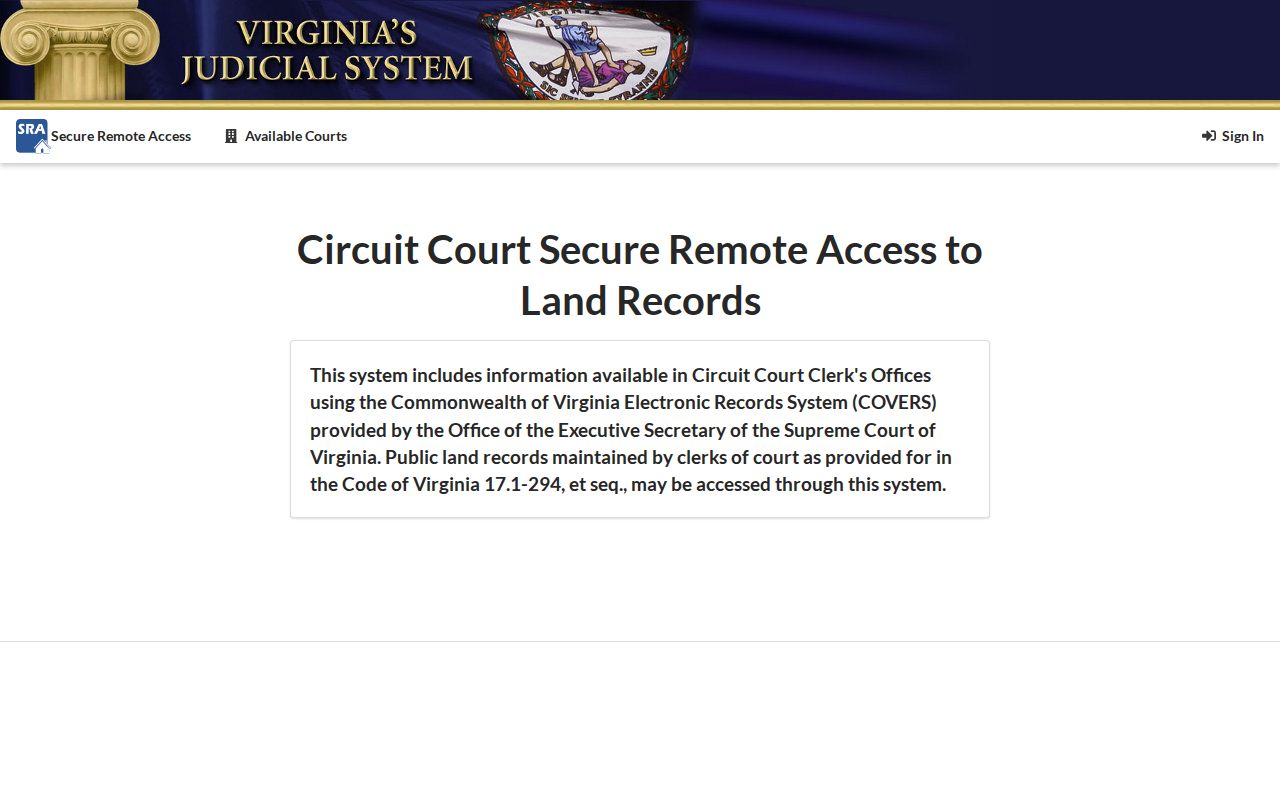
The SRA index and the archival books serve different routes. Use the index reference to anchor the older reel work in Goochland deed records. Then open the Library of Virginia Goochland records finding aid to identify the relevant book or reel.
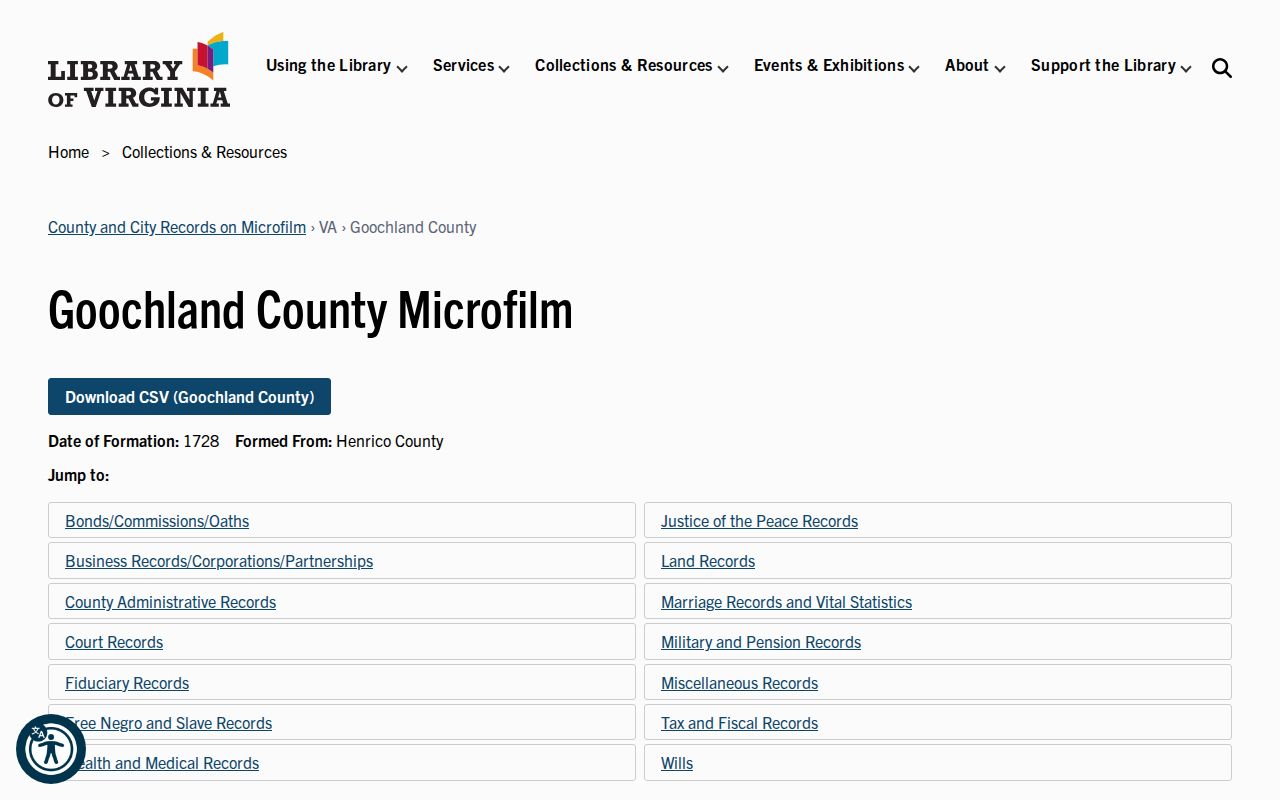
The finding aid gives a series map. It does not by itself prove that each earlier owner held the present Goochland parcel.
Estates Bridge Goochland Ownership Gaps
A deed chain in Goochland County rarely breaks without a reason. Often the owner of record died. A will, an executor, or a commissioner then carried the parcel to its next grantee. The Goochland Circuit Court Clerk holds the wills and estate administration files. Those records explain who had authority to sign. The Library finding aid points to fiduciary and loose-record materials as well. A will alone names heirs. The conveyance or court order shows how the described parcel actually moved.
Work from the estate name, the personal representative, and any case reference you can find. Note the date and the deed book and page. When the grantee is a trustee or a corporation, trace that role back to its source record. Do not assume a person stood behind it. Probate and partition files can explain a transfer in Goochland County property records. They never replace the land description itself.
Old Goochland Parcels Outlast Street Names
An old Goochland deed rarely matches a modern situs address. Early instruments describe land by acreage, road, creek, adjoining owner, or lot instead. Rural address labels and postal places can also differ from the historic land description. Start from the deed you know. Then compare the roads, watercourses, acreage, and neighbors named in each earlier instrument. A present GPIN can help you locate the current parcel. It may not appear in a colonial deed, though.
When a tract was divided, the parent parcel and its recorded subdivision plat connect the old description to today's lots. Search adjoining owners and spelling variants when the name index runs thin. A changed address alone does not mean the land changed hands. A matching street number by itself does not prove two records describe the same tract.
Goochland Chain-of-Title Notes
A good chain worksheet tracks far more than names. For every transfer, record the execution date and recording date. Note the deed type, grantor, grantee, and book and page. Add the acreage, metes-and-bounds calls, road or creek, adjoining owners, and consideration if stated. Spouse language, GPIN, and tax map belong on the sheet too. Any probate or court reference belongs there as well. Note the source reel or image location. Flag a shaky match with a confidence note.
These details matter in Goochland because Book 1 carries an incomplete index. An older description may not use the current street address. An adjoining owner or creek name can bridge the gap when an index search returns nothing. When a party acted as trustee, estate representative, or company, follow that capacity to its supporting record. Do not treat the name as a simple buyer or seller.
How Far Goochland Ownership Records Reach
The archival finding aid documents Goochland land volumes beginning in 1728–1734. That start does not promise an unbroken chain to every modern parcel. The first book's index is also incomplete. Official sources publish no start year for the SRA online index. The county dates digital land-record keeping to 2001. That is a digitization milestone, not the first year deeds went online.
When an online result stops short, ask the Clerk about the courthouse books. Library of Virginia reels cover the historic index ranges. Keep the last known deed reference and parcel description handy when you shift channels. Some instruments are not visible remotely. In that case, the local Clerk can explain counter research and copy options. The county does not publish its copy fees. Confirm the cost of plain or certified copies before making a request.
Lawful use. Former-owner research supports property history and title work. Do not use names or addresses to track, stalk, harass, or harm any living person.