
How to Find a Goochland Property Owner
The practical route runs address to parcel, parcel to assessor, then assessor name to deed. Start with the county Parcel Viewer or the assessment entry. Either one can surface the GPIN and the owner field shown on the live record. Be careful, though. Some linked county pages offer only policy and contact details, with no owner-name search box. Confirm what the page actually provides. Once a name or GPIN is in hand, Virginia SRA helps you locate recorded instruments. Then compare the grantee on the newest matching deed.
Then check the fit. A deed's legal description should match the same land. One person can own several parcels, and one deed can hold multiple tracts. Address, mailing address, GPIN, acreage, and subdivision or road details all help confirm the match. If the newest deed names a trust, LLC, executor, trustee, or commissioner, keep that capacity intact. Do not rewrite it as an individual owner. A current owner lookup centers on the present record and its timing.
- Locate the address in the Goochland Parcel Viewer and record the GPIN and map highlight.
- Open the linked assessment information and transcribe the owner and mailing fields actually displayed.
- Search the newest matching grantee or grantor in the Circuit Court land-record index, then check the deed image or clerk copy.
- If an entity is named, use the Virginia SCC business search to learn its filing status and registered agent, while keeping in mind that the agent may not be the beneficial owner.
- Use the mailing address only as a property-related contact clue; a tax address does not prove residence.
Owner of Record Is Not an Occupant
An owner of record is not always an occupant. The deed names a grantee; the assessment names an owner. Neither tells you who lives there. Rentals, second homes, vacant tracts, family trusts, and LLCs all open a gap between the owner's name and the people using the land. Goochland's public sources do not establish occupant identity, and the owner's mailing address may lie elsewhere.
Read the two addresses differently. The situs address pins down the land. The mailing address tells you where the county sends its notices. Neither is permission to approach anyone. For a land question, reach the owner through an appropriate property-related channel using the public record. For legal notice, follow the applicable procedure rather than inferring service from an assessment card.
Where Goochland Ownership Is Shown
Several Goochland records carry an owner name, but they are not interchangeable. Each plays its own role. The Assessor's parcel record holds the owner-of-record field and the assessment context. The land-record index names deed parties. GIS links a parcel to a map and its GPIN. The Treasurer keeps the tax account. For a reliable owner check, locate the parcel in GIS. Then compare the Assessor entry against the latest deed.
| Source | Owner Info It Gives | Access |
|---|---|---|
| Assessor parcel record | Owner field, mailing address, and assessment context; exact live labels need checking | County assessment page and Parcel Viewer |
| Circuit Court deed index | Grantor and grantee parties on recorded land instruments | Virginia SRA; Goochland image access is restricted |
| Virginia SCC entity search | Business filing history and registered agent for an LLC or corporation | Clerk’s Information System |
| GIS parcel viewer | Parcel shape, GPIN labels, address and subdivision context | County Parcel Viewer |
The Goochland Assessor page describes the public assessment records. It also cautions that its zoning description should not be treated as an official current determination.
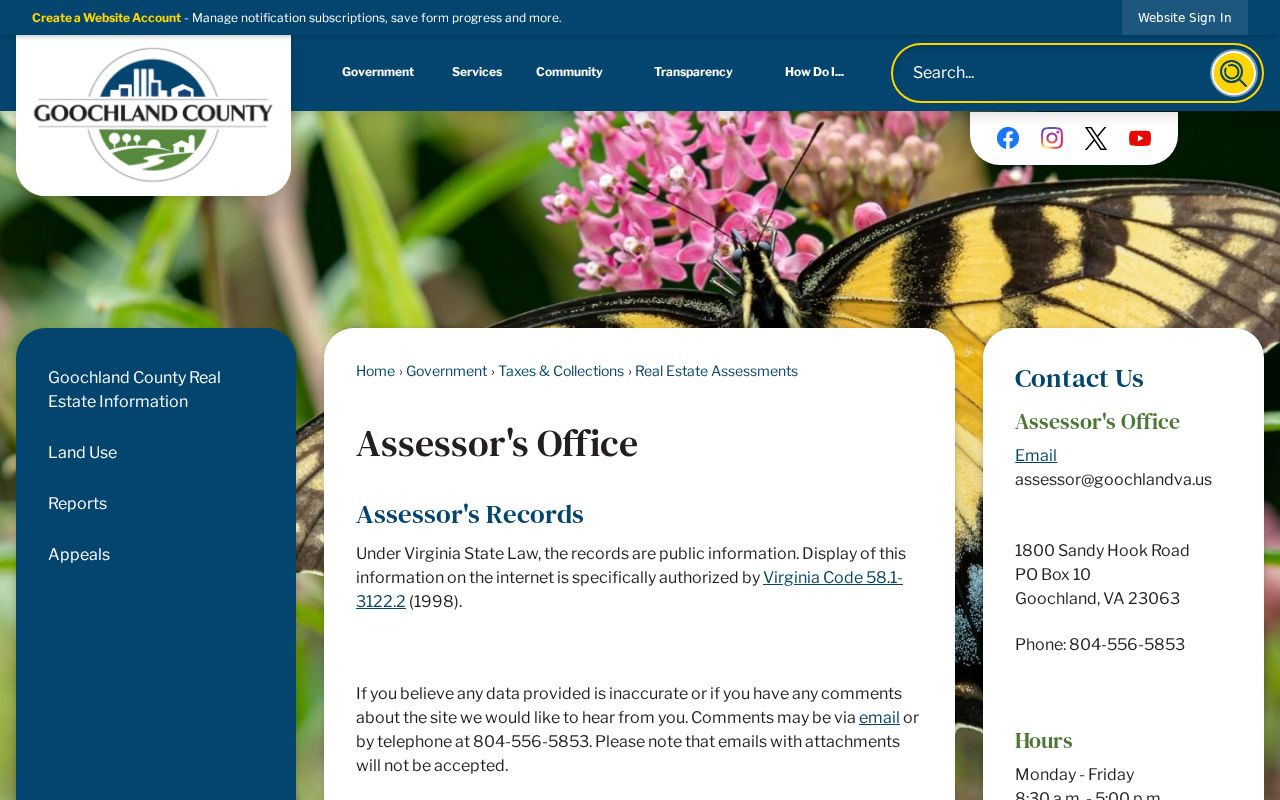
Use the public notice to understand the assessor source, then confirm any transfer with the recorded deed. Each record serves a different purpose. The deed records the transaction. The assessor tracks owner of record and assessment. The GIS map is a locator. If two records disagree, compare their dates before calling the difference an error. A newly filed deed can precede the next annual land-book update, since county tax land books use a January 1 snapshot and a prior owner may stay on the tax bill after a conveyance.
Why a Goochland Tax Bill May Lag
Goochland’s annual land-book timing explains a common mismatch: the Treasurer’s bill can still show the prior owner because the book is printed as of January 1. The research does not state an average closing-to-roll delay, so no number of days should be promised. For a recent sale, use the newest recorded deed to identify the grantee and ask the Treasurer how the account is being handled.
Assessment information is updated on the Parcel Viewer by January 15, while tax collection and deed recording follow different office processes. Keep the recorded date and the assessment update date separate in your notes. If an owner needs to dispute a value, the Assessor’s February 15 informal review deadline and the 30-day Board of Equalization period after a results letter are different from the tax account’s due dates.
LLC and Trust Owners in Goochland
A deed in Goochland County sometimes names an LLC or corporation as the grantee. In that case, take the exact legal name from the deed. Run it through the Virginia SCC Clerk's Information System. The entity record can show business filings and a registered agent. That tells you about the company itself. It does not prove the agent owns the land. Copy the punctuation, suffixes, and entity status exactly as written on the deed. A near-match name can point to a different business entirely.
Trusts raise a similar puzzle. A trustee may hold title. An estate transfer may run through an executor or commissioner. Goochland's Circuit Court Clerk handles wills and estate administration. Its records can link a probate event to a later deed. When a name fails to match the tax roll, compare the deed date, parcel description, and legal role first. The gap may just be a fiduciary signature. To pull entity filing details, search the Virginia SCC business information system.
An entity page may list a registered agent. Even so, the recorded land instrument still controls which legal party actually took title.
Ownership Alerts for Goochland Parcels
Goochland County promotes VADeed Alert, a free voluntary notice service. It sends a notice when a recording matches a monitored name or Tax Map/Parcel ID. A new filing flag can be helpful. But a notification is not a title opinion. It never replaces pulling the deed itself. Before acting on an alert, check the instrument reference. Confirm the recording date, named parties, and legal description against the parcel.
Name-only alerts get murky with entity and fiduciary ownership. A parcel key may work better if the service accepts it. Confirm the current setup on the official portal. And if an odd notice arrives, contact the Circuit Court Clerk through the county land-record page. Do that rather than replying to some unsolicited message.
Goochland Estate Ownership Records
After an owner dies, a recorded deed often names the next grantee. That grantee is frequently an executor, administrator, trustee, or commissioner. An heir from a family account may never appear by name. Goochland's Circuit Court Clerk handles wills and estate administration. Its fiduciary records can cover qualification, inventories, accounts, partition, and executor or commissioner deeds. These records explain the authority behind a transfer. Still, the deed's legal description is what ties the transaction to the parcel.
Keep the estate name, the representative's role, the instrument date, and the GPIN or legal description together. Treat them as one package. The assessor name and the deed grantee may differ. Ask whether a fiduciary transfer explains the change before assuming the public record is wrong. Older estate and loose-record material may also surface in the Library of Virginia finding aid.
Limits of a Goochland Owner Search
A public record names a party in one specific document. It cannot confirm who lives at the property or capture every present claim. Virginia runs an Address Confidentiality Program under Va. Code §2.2-515.2, and some address details stay protected or redacted. A land-record search is also not a title opinion. For a boundary or conveyance dispute, lean on the Clerk's instrument, a title professional, or a licensed surveyor as the issue demands.
Lawful use. Goochland owner records are for lawful property research and due diligence. Do not use a name or mailing address to stalk, harass, or harm anyone.